
Bite Sized Book Review: Sitting Pretty
Bite Sized Book Review
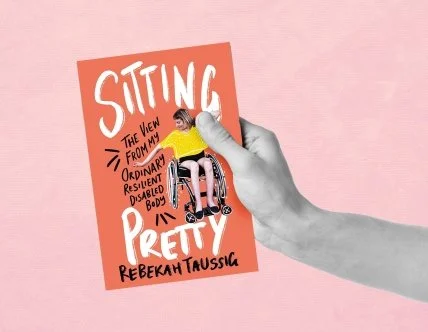
Sitting Pretty: The View from My Ordinary Resilient Disabled Body, By Rebekah Taussig
Reviewed by Sandra Loeppky, Coordinator of Accessibility Programs, Canadian Mennonite University, Winnipeg
In thirty seconds (or less), what was this book about?
The lived experience of a person with a physical disability in North America. It’s about recognizing ableism, where it exists, and how we don’t even notice it. Taussig is a high school teacher and educator, as well as an advocate.
Why did you pick this book?
It was recommended by a colleague on the Accessibility Committee at work. We applied for an internal grant through the Intercultural Health Committee and launched a Campus Book club where we invited other staff/faculty in to read it with us.
What did you like or dislike about the book?
I loved the author’s vulnerability—that was the most powerful part of the book. She shared so much of her own experience.
One impactful story from the book was how her identity was something she learned ‘from the outside.’ She talked about how she was taught that she was disabled as that had not been her experience as a child. For instance she was told that the dancing that she felt was graceful and beautiful was not in other’s eyes.
What was one thing (or more than one thing…) that surprised you about this book?
Her chapter on feminism. The intersectionality of women and disability has largely been pushed aside by the feminist movement. She tells a story about showing up to a rally early in Trump’s campaigns and identifying ‘disability rights’.
How her experience as a women was so hugely different from that of others. Hearing stories about peers receiving ‘wolf whistles’ and her never having experienced that. The questions that have been raised around femininity, maternity, etc based on her physical abilities or perceived disabilities. (For example, being asked: Are you even fit to be a mother?)
How she spoke about the privilege she has within the disability community as a white women. And also the privilege of having family and housing to fall back on—including if income isn’t sustainable/possible.
What is one question that was left unanswered at the end of this book?
Is legislation the right approach to talking about inclusivity? How do we build an inclusive society that does not rely on or is solely based on legislation?
What is something that you have been thinking about in relation to this book and your work?
Two things:
- How deeply imbedded ableism is in our view of the world. Who we see as heroes and who who we see as victims how we communicate; how we expect the world to be shaped; what is understood as a deficit and what is a benefit. Higher Education is often a space that requires or expects productivity in short bursts (one semester=13 weeks). If you can not conform or perform to that schedule, what opportunities do you have to be involved? Can it even be inclusive in the current structure? The system we have built excludes certain voices based on how we have decided it is structured.
- The intersectionality present when working with students. Even how a space does or does not have room for women’s bodies: For example, I’ve seen a notable increase in female students arriving in my office with documentation for endometriosis pain and the difficulties they experience with the institution’s academic attendance policy because of their physical realities. My work is focused more on learning disabilities and this book is mostly about physical bodies, but obviously that is inherently connected.